
Petaluma Added a Seventh Period. Students Filled It With Career Education.
Last fall Petaluma's two comprehensive high schools moved from a six period day to a seven period day. Students had one more class to fill, and they spent it largely on career education.
Participation in Career Technical Education, which everyone here calls CTE, increased by 50% in the past year. Of roughly 2,800 students across @Petaluma High School and @Casa Grande High School, about 2,000 are now in at least one CTE course, and the number completing a full pathway, meaning two or three courses in sequence, is up forty percent.
This increase aligns with a national conversation about the value of a traditional four year degree, driven by rising tuition and by uncertainty about how AI will affect entry level work. Enrollment at vocational and trade focused two year colleges grew nearly 20% nationally between 2020 and 2025, outpacing public four year schools, and Gallup found this year that a record low 31% of Americans call a college education very important, down from 70% in 2013.
There is a version of this on our own ballot. Measure AB would authorize $830 million in bonds for the Sonoma County Junior College District, and its ballot language leads with career training: nursing, firefighting and first responders, building trades, agriculture, auto mechanics. I am working on a piece about Measure AB and will share that here soon.
The Dan and Victor Show
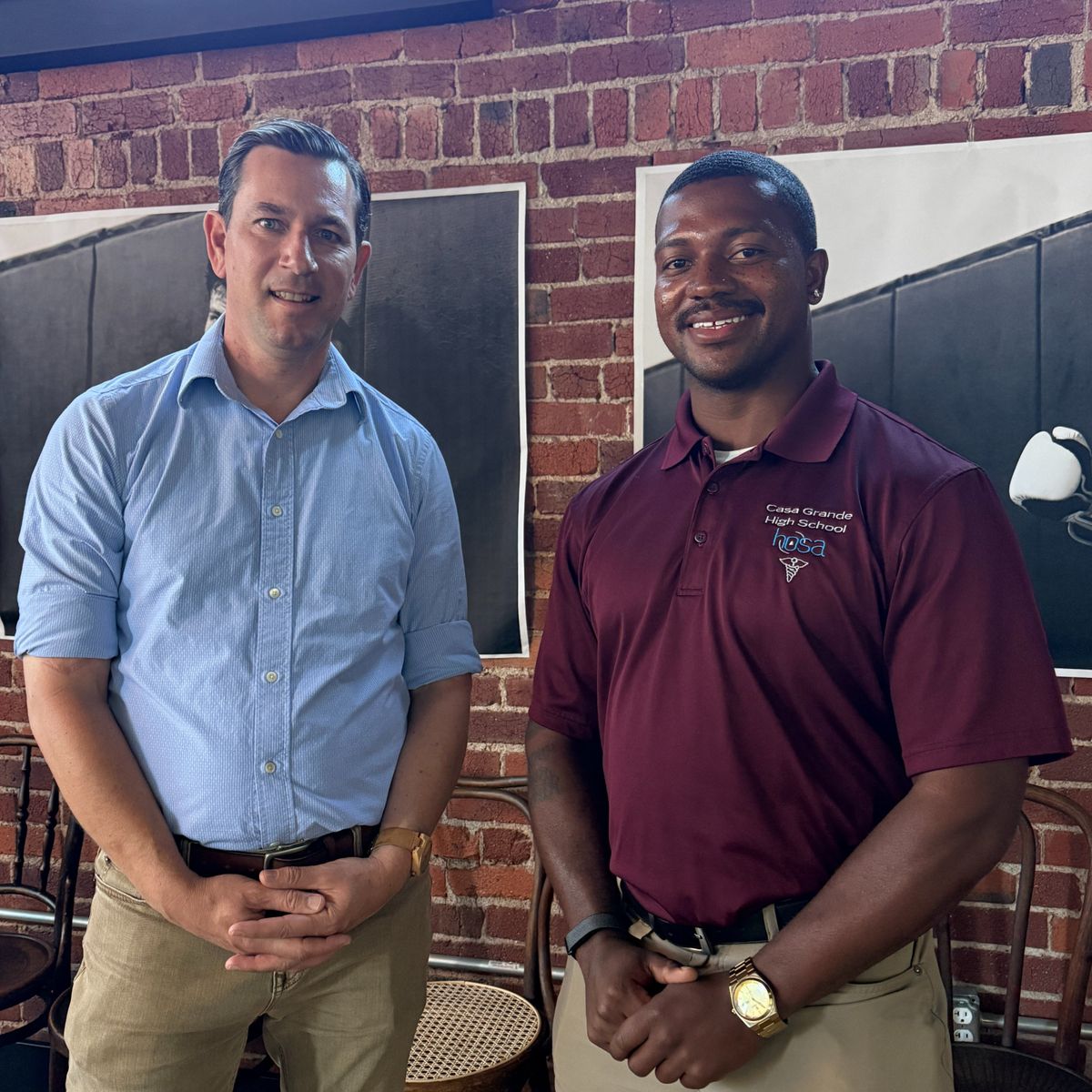
@Dan Ostermann and @Victor Hughes came by the Porches office Monday to talk about the programs they support. Dan is the district's College and Career Pathways Coordinator, a position he has held for four years and which did not exist until he stepped into it. Before that he was Principal of Casa Grande High School. Victor is the Work-Based Learning Coordinator, a job that also did not exist before him. They have worked together going on three years.
"We like to call it the Dan and Victor Show," Victor said.
Dan is clear to say that none of this is an either or here in Petaluma. The program is deliberately called College and Career, and the pathways are built to feed both. A student can finish one, earn an industry certification, collect early college credit through Santa Rosa Junior College or Sonoma State, and go straight to work or straight to a university.
Health science, and a certification before graduation
The health science pathway is the largest, with close to 600 students between the two schools. Forty one of them have now completed the Certified Nurse Assistant program, which makes them employable the day they graduate. Grants from Healthy Petaluma and Sutter covered the cost for the last round, so students paid nothing. Dan tells applicants that a CNA earns them an extra point on a nursing school application and lets them work in the field while they study, which offsets what the degree costs them.
Getting students into the field
Victor's side of the work happens mostly outside the classroom. He is the one calling employers, arranging field trips, finding a company willing to host a job shadow or send a speaker into a classroom.
"There are still teachers that have a fantastic program and they're like, this is our first time going on a field trip," he said. Coordinating buses and permission slips on top of teaching is sometimes too much, so he does that legwork himself and hands the trip over ready to go, leaving the teacher to focus on the classroom.
Additionally, he is working in the other direction of communication and partnership. He asks employers what an entry level hire needs to know, which certification, which skills, which software, and takes that back to the teachers so the classroom remains aligned with the job.
"The biggest thing is just taking the fear out of having a teenager in your workspace," he said. He and the district worked through the liability questions across the full range, from regulated health care settings to shops with heavy machinery, and for paid and unpaid placements both.
On the topic of AI
The thing I most wanted to ask them about was AI. If you are building programs that train students for specific jobs, and nobody knows which entry level jobs will still exist in five years, how do you plan for that? Dan is candid that nothing is decided. He has started the conversation internally with CTE teachers and administrators, including whether the district should sanction AI fluency certifications, but plans are still in development.
"All of us are waiting to see what the impact is going to be," he said, calling it two-sided, an amazing tool with some frightening pieces. "It's very much TBD."
What they need from Petaluma
Here is where you come in. They want more Petaluma businesses and nonprofits involved. A guest speaker. A tour. A job shadow. An internship.
"We're not sending you somebody who doesn't know something," Victor said. "We're working on soft skills in the classroom. What we need from you are the hard skills [experience for students in the workplace, across a wide variety of sectors]."
Continued growth, and the wish list
Asked what he would build without money as a constraint, Dan did not hesitate. A dedicated career education center, possibly at the fairgrounds as that site gets reimagined. Paid internships across the board. More staff in the lab spaces, the metal shop and the auto shops, so class sizes could come down in those spaces where the equipment can be dangerous.
If you want to host a student or speak to a class, reach out. Dan and Victor hold office hours Fridays, one to three.
College and Career Pathways · CTE Pathways · CTE Foundation Sonoma County
Thank you Dan and Victor for the time, and for the coffee conversation. More to come on the individual pathways, with students Petaluma's students doing the talking!
📷: Dan Ostermann is top left in the photo above with Victor Hughes on the right
♦️♦️♦️♦️♦️
More on the schools
Porches built a public data dashboard for Petaluma City Schools at petalumaschools.com, using district audit reports and state and federal enrollment files. Enrollment school by school going back to 1993, per student spending, this year's cuts, and where the $229 million in bond money is going are all in there.
And for the governance basics, who sits on which board and what those boards decide, Meet Your Petaluma School Boards is the place to start.