
Go Do Something About It: Jama Adams and the Local Version of a Very Big Question
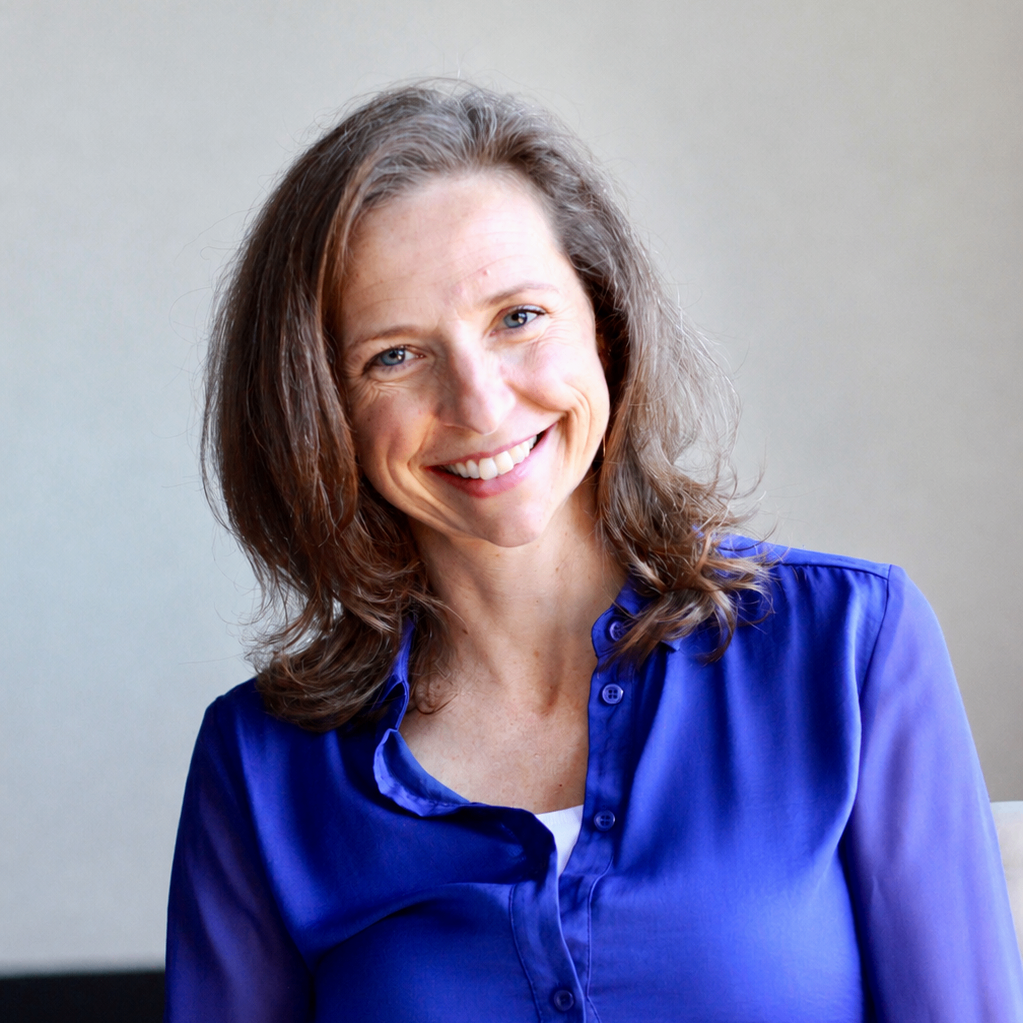
Something is wrong? Go do something about it. She got that from her grandparents and has spent twenty five years acting on it.
@Jama Adams grew up in Los Angeles. On the first day of orientation at UCLA she spotted @Brian Fishman in a crowd and, as she tells it, thought: that one, please. He was from here. She started visiting Petaluma at eighteen or nineteen and could not get over it.
"I would walk around and everybody knew each other. My mind was blown."
What she does for a living does not have a tidy name. For twenty five years she has been the person who gets money and attention pointed at hard problems, mostly other people's: philanthropy, clean energy, technology policy, elections. Almost all of it happened somewhere else, and none of it is the reason her neighbors know her.
They moved here in 2022, with their kids who are all at Petaluma City Schools. They came for the family. As she puts it, why don't we live around our amazing family, let's go do this.
Two families with the same instinct
Her own grandparents met each other at an interfaith social justice gathering. What she absorbed from them was less a politics than a habit, and she explains: something is wrong, go do something about it.
Then she married into a family that had arrived at the same habit on its own.
The Fishmans came to Petaluma in 1919, Russian Jewish immigrants who started a chicken ranch when this was still the Egg Basket of the World. A hundred and seven years later, there are a great many of them, branches and cousins spread through town, and the civic habit runs through many of them.
When Jama says the Fishmans, she does not mean the ancestors. She means all of them, the cousins included, and she says it in the present tense.
"The Fishmans are my civic heroes. They are the joiners and the doers, the town lawyer, the school trustee, the teachers. They just love this place."
So she loved Petaluma before she lived in it, which is a thing you can only really do if the loving is about people rather than scenery.
The national work
The specifics are hers to tell, because very little of this has ever been written up anywhere publicly. By her own account, across twenty five years, she was the first employee at the Giving Pledge and helped grow it to roughly a hundred signatories. She worked on a fusion energy raise that brought in $1.8 billion in twelve weeks, and on founding an industry association around it. She led the committee that produced a responsible AI framework for the startup world, launched with the Secretary of Commerce. She spent five weeks knocking doors in Arizona in the fall of 2024. She has taught community organizing.
The through-line is the same one her grandparents handed her.
"The best part, and this is something I've always done, is bring the unlikely allies, the strange bedfellows. I know we don't agree on everything. But we all have this shared goal. Let's align around these values and go attack something that's really hard."
Since 2022, the container for that has been People in Common, a podcast she started that fall. She calls it as an activation engine, and the front door of it is her interviewing the people she describes as her civic heroes. The first was Father Greg Boyle, who founded Homeboy Industries in Los Angeles and has spent nearly forty years employing people coming out of gangs and prison. She started the show, she says, because after the pandemic she felt at a loss and wanted to talk to people who were already in motion.
Then there is Friday morning
When she moved to Petaluma in 2022, that was the year this town rewired how it elects everyone. The city council switched from at large to six districts that April. The school board switched to five trustee areas that November. Both changes came under the same state voting rights law, and both determine who gets represented for a generation. Jama now writes explainers about all of it for her neighbors, which is unglamorous work and genuinely useful.
And she started the Innovators, which began as two friends getting coffee at the @The Bagel Mill.
The format that emerged is called Help Me Solve This. One person brings a real problem, sends around a short note beforehand, and gets forty five minutes of the room's full attention. It clicked, she says, the morning a member shared that she was about to acquire the business she had once interned at, and laid the whole vulnerable thing on the table. Somebody produced a lawyer. Somebody had done that exact kind of acquisition before. Somebody offered moral support. It has grown from two people to fifty-nine, meets one Friday morning a month, moves around to whoever offers to host, and is open to anyone with two qualifications: an entrepreneurial mindset and a love of Petaluma.
She is deliberate about keeping the ask small.
"It's directed at busy people. The idea is not to overload anyone. But the commitment, and the showing up for other people, and being asked to help other people, that's a big part of the magic. We want to be asked to be helpful, and to serve, and to have purpose."
What she has figured out
Two things she said stayed with me.
The first is about scope, and it is the opposite of what you might expect from someone who convenes things for a living.
"My job is not to make you join my thing. My job, as I see it, is for each of us to go really deep about the thing we were put on this earth to do. And then I'm telling you, go do it."
The second came out of a question about whether she can say no, which she admits she is bad at and is getting better at with age.
"Clarity is kind."
She says she wants to help everybody all the time, and that you cannot. What she has instead is a sharpening sense of where she is most useful, which she describes as knowing where she is most alive.
She has raised money at national scale, organized in swing states, and convened people across sectors that barely speak to each other. Her answer to what we do about any of it is a circle of chairs in Petaluma on a Friday morning. Her grandparents met at a gathering. The Fishmans have been joining things in this town for a hundred years.
If you have an entrepreneurial streak and you love this town, the Innovators would like to meet you. Porchmail Jama to learn more about the Innovators.
♦️♦️♦️