
A call from the Farallon Islands
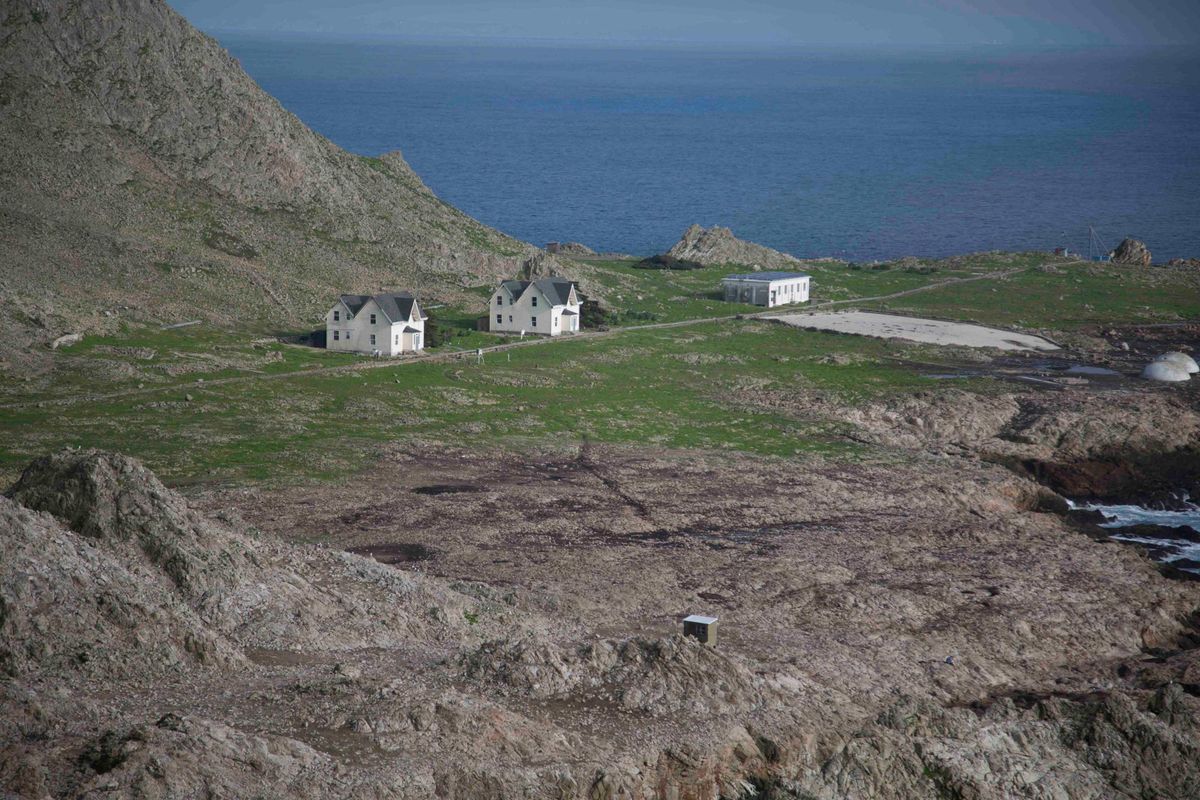
A few minutes into my phone call with Pete Warzybok, he paused. Someone at the lighthouse had spotted a pod of dolphins, and the update from a researcher was blaring through his handheld radio.
“Stuff like that happens every day out here,” he said.
Pete was calling from Southeast Farallon Island, about 26 miles from the Golden Gate Bridge, where he leads a research program for Point Blue Conservation Science. The islands are part of a national wildlife refuge managed by the U.S. Fish and Wildlife Service, with Point Blue serving as its science partner.
Point Blue studies wildlife from California to Antarctica and puts that research to work, helping farmers restore habitat, students take part in conservation, and land managers protect ecosystems.
I’d heard a few scientists lived year-round on the Farallon Islands, which are closed to the public, and wanted to know what that life was like, especially knowing that a nonprofit based here in Petaluma runs the research program.
“We’ve had people on the island every single day since April 3rd of 1968,” Pete told me.
Between four and eight researchers live there at a time, sharing old lighthouse keepers’ houses now set up more like bunkhouses. Volunteer boat owners, collectively known as the Farallon Patrol, transport crew and supplies from the mainland. “We wouldn’t be able to do it without that,” Pete said.
Supply boats usually come every two weeks, but rough winter seas can stretch that to a month or more. The crew stocks up on nonperishables and prepares to stay put when that happens.
Pete first arrived as a volunteer research assistant in spring 2000. “I fell in love with it immediately and decided I needed to find a way to stay,” he told me.
Twenty-six years later, he is Point Blue’s principal scientist and Farallon program leader, having spent more than 2,600 nights out there, which is "more than any other living person." He also spent ten years living in Petaluma. Now based in Minnesota, he returns to the island roughly every three months.
I asked what his day had been like so far, around 11:30am on a Wednesday. He’d been up at six to record the weather, then headed uphill for shark watch. Surveys of brown pelicans and migrating birds followed, then maintenance on the crew’s housing. After our call, he said there would be whale watching and a survey of birds passing offshore.
More generally, the researchers follow the animals’ seasons, tracking what wildlife eats, breeding success, and population changes.
Pete said they were already seeing effects of El Niño this year. He is seeing fewer pups born to some seals and sea lions, and an uptick in deaths among young birds learning to feed themselves as food became harder to find. He worries about wildlife’s ability to recover if severe events happen too frequently.
I was curious how those changes connect to everyday life here in Petaluma.
He gave me an example with salmon. Pete explained that a marine heat wave earlier this year had reduced the food available to young salmon heading out to sea. He described this year’s harvest as good, but expects those shortages to affect production over the next few years, potentially making salmon harder to get.
The birds, seals, and sea lions offer clues, he explained: “Through our observations of what they’re doing, we can understand the greater ecosystem and how that’s changing.”
Pete said the loss of U.S. Fish and Wildlife Service funding for the research program put the team at risk of leaving in September 2025. Private funding filled the gap, he explained, and Point Blue is now developing a new funding model. “We hope to stay here for another 50 years or more,” he said.
As we wrapped up, I asked what had made him fall in love with the island. Why does he keep going back?
“It really is wild out here,” he said. “The Farallon Islands belong to the wildlife.”
He described how different it feels to live somewhere nature is in charge, where the animals dictate the day’s activities. More than 440 bird species have been recorded on the islands, Pete told me, including unusual visitors far from their typical range. Even after all this time, there’s still the anticipation of what might appear.
“Every day something new could show up, and there’s an excitement to that.”
♦️♦️♦️
📸: Images 1, 2 &3 by Maps for Good/Point Blue/USFWS, Image 4 aerial view by John Warzybok
To learn more, you can watch the live web camera on the islands and learn more about the program overall on the Point Blue website.